
The old pond –
a frog jumps in,
sound of water.
– Matsuo Basho, (translated by Fumiko Saisho)
There are many translations for one of the most famous haikus ever written, but the above is the most literal translation of the romanized Japanese shown below.
Fu-ru (old) i-ke (pond) ya,
ka-wa-zu (frog) to-bi-ko-mu (jumping into)
mi-zu (water) no o-to (sound)
The world, one could dare, is quite an “old pond”; through its tumultuous geologic history, it has arrived to the current day with seven (or four or six, depending on how you count your continents!) enormous lily pads. And so, us humans – or frogs in this case – are driven to “jump”, not tiptoe, into this world, to explore its depths.
Basho, in the third line of this haiku, leaves us hanging, suspended in time, left with the kinetic visual of the frog jumping. “Sound of water” – did he land where he wanted? did he crash on rocks and slide? was this simply a ripple of water or was it a roar?
We have just one hint: “sound”.
Is it strange to want to follow this frog? To follow its leap, leaving those behind you to wonder at what the “sound” of your departure means, how it will change you, your environment? Countless frogs have jumped before, both the good frogs and the bad frogs, but they are frogs nonetheless. Some of their sounds have echoed our home, our “old pond”, for centuries.
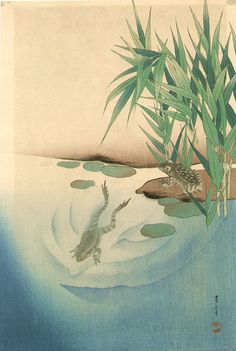
What will my “sound” accomplish?
———————————————————————————————————-
Estes Park, Colorado | June 20, 2015 | Carolyn Bell
[More information on this haiku can be found here. Images found here and here.]

 throw off the bowlines